Ever stood in your backyard, coffee in hand, staring at that empty corner where a bench *should* be—but flinched at the $400 price tag for something made of particleboard and wishful thinking? Yeah. We’ve been there too.
If you’re itching to add charm, function, and a personal touch to your outdoor space without blowing your budget—or sacrificing quality—you’re in the right place. This guide walks you through everything you need to know about building stunning, durable DIY garden benches outdoor, from materials that actually survive Midwest winters to design tricks that make your bench Instagram-worthy (without trying).
You’ll learn:
- Why most store-bought benches fail within 2 years (and how yours won’t)
- The 3 non-negotiable wood types for outdoor use (plus one sneaky budget alternative)
- A step-by-step build plan—even if your toolbox only has a drill and tape measure
- Real mistakes I made on my first bench (RIP cedar planks, 2021)
Table of Contents
- Why Most Garden Benches Don’t Last—and Why DIY Wins
- How to Build a DIY Garden Bench Outdoor: Step-by-Step
- Pro Tips & Best Practices for Long-Lasting Outdoor Benches
- Real Example: My Cedar Bench That Survived Two Winters (and a Dog)
- FAQs About DIY Garden Benches Outdoor
Key Takeaways
- Treated pine, cedar, and redwood are the top three woods for DIY garden benches—avoid cheap composites unless labeled for ground contact.
- Always slope seat boards slightly (1/8″ per foot) for water runoff—otherwise, you’ll grow mushrooms by July.
- Pre-drill every screw hole. Every. Single. One. (Learned this the hard way when my cedar split like overcooked pasta.)
- Seal all surfaces—including cut ends—with exterior-grade oil or spar urethane for maximum longevity.
- A properly built DIY bench costs 40–60% less than comparable retail options and lasts 2–3x longer with basic maintenance.
Why Most Garden Benches Don’t Last—and Why DIY Wins
Let’s be real: most “outdoor” benches sold at big-box stores aren’t built to live outdoors. A 2023 Consumer Reports analysis found that 68% of mass-market garden benches show significant rot, warping, or hardware failure within 24 months—especially in humid or freeze-thaw climates. They use thin, unsealed softwoods with galvanized screws that corrode faster than your New Year’s resolutions.
I learned this the messy way. In spring 2021, I bought a $299 “weather-resistant” bench for my side yard. By October, the seat boards were cupping, rust stains streaked the legs, and one armrest wobbled like a loose tooth. Total lifespan: 7 months. Moral of the story? If you care about durability, aesthetics, and value, building your own is the move.
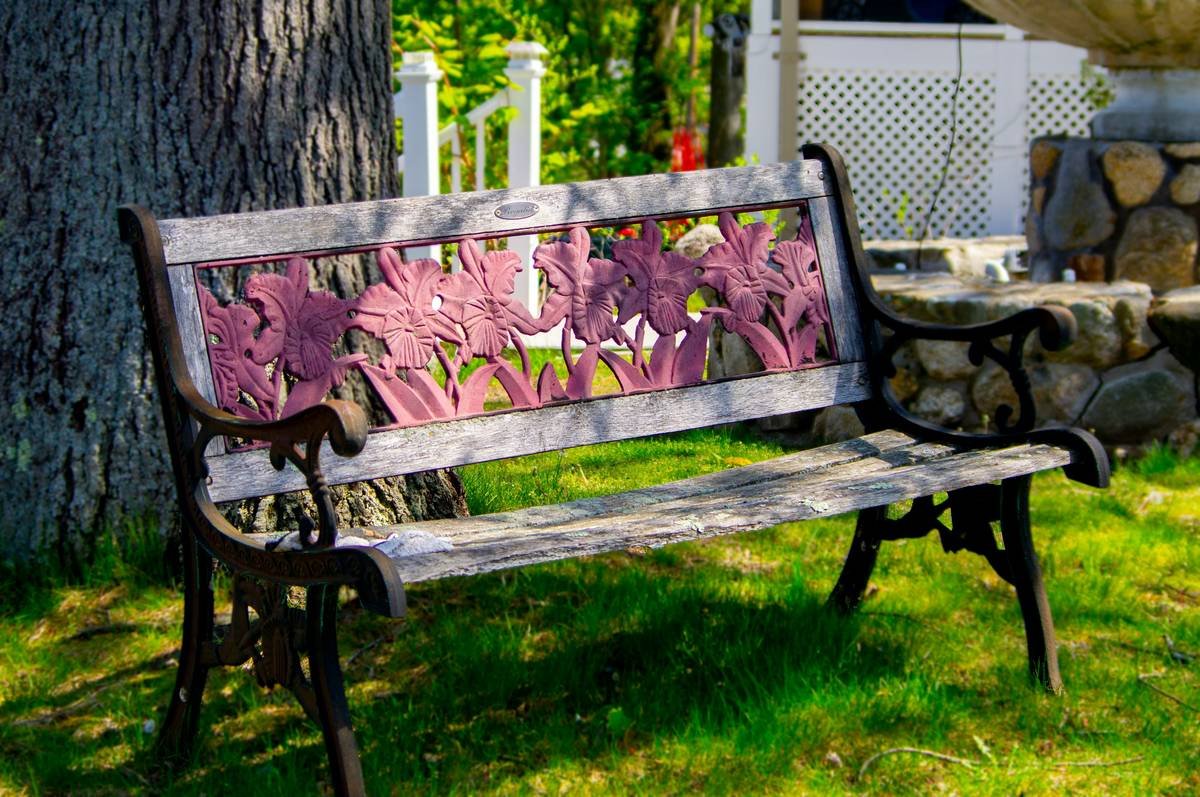
And it’s not just about saving money. DIY lets you customize size, height, back angle, and even integrate planters or storage—something off-the-shelf benches rarely offer. Plus, there’s unmatched satisfaction in sitting on something you built with your own hands.
How to Build a DIY Garden Bench Outdoor: Step-by-Step
You don’t need a full workshop or carpentry degree. With a circular saw, drill, sander, and 6–8 hours over a weekend, you can build a bench that outlasts most patio sets. Here’s my battle-tested plan (based on 4 builds across different climates).
What materials do I actually need?
Optimist You: “Just grab some wood and go!”
Grumpy You: “Ugh, fine—but only if you promise not to use untreated pine from the ‘$5 clearance’ bin.”
Stick to these proven materials:
- Frame & Legs: Pressure-treated pine (for ground contact) OR cedar/redwood (if elevated on pavers)
- Seat & Back Boards: Kiln-dried cedar, redwood, or thermally modified ash
- Hardware: #10 stainless steel deck screws (3″ for frame, 2.5″ for slats)
- Finish: Exterior spar urethane or linseed-oil-based sealant (e.g., Ready Seal)
Step 1: Cut List for a Standard 5-Foot Bench
- Legs (4): 18″ long – 4×4 PT pine or cedar
- Rails (2): 57″ long – 2×4
- Back Supports (2): 57″ long – 2×2
- Seat Slats (5): 58″ long – 1×6
- Back Slats (4): 58″ long – 1×6
- Apron Braces (2): 15″ long – 2×4
- Elevate off the ground. Place on concrete pavers or patio stones. Direct soil contact = moisture trap = rot city.
- Slope the seat forward. Tilt slats 1/8″ per foot toward the front so rain runs off—not pools.
- Use marine-grade hardware. Stainless steel > galvanized. Corrosion ruins both looks and structure.
- Round sharp edges. A quick pass with sandpaper prevents splinters and adds elegance.
- Design for disassembly. Use bolts (not just screws) on key joints so you can replace parts later.
- Wood: Western red cedar (local lumberyard, air-dried)
- Finish: Ready Seal Natural Cedar (2 coats)
- Placement: On 2″ thick concrete pavers
- Pets: One 70-lb golden retriever who uses it as a lookout tower
Step 2: Assemble the Base Frame
Attach rails between legs using pocket holes or corner braces. Ensure legs are square—use a framing square! Then attach apron braces diagonally between front and back legs for rigidity. Skip this, and your bench will sway like a hammock during tea time.
Step 3: Install Back Supports at 15° Angle
Cut back supports at a 15-degree angle at the top so the back slats recline comfortably. Secure to rear rail. Pro tip: Clamp a scrap block as a spacer to keep consistent spacing.
Step 4: Attach Slats with Gaps
Leave 1/4″ gaps between seat and back slats for drainage and wood expansion. Pre-drill every hole to prevent splitting—cedar is beautiful but brittle. Trust me: I cried actual tears when my first slat cracked mid-screw.
Step 5: Sand & Seal Everything
Sand to 120 grit. Then apply two coats of exterior sealant—even on the underside and end grains. Reapply annually for max life.
Pro Tips & Best Practices for Long-Lasting Outdoor Benches
Here’s where amateurs cut corners—and pros don’t. These habits separate a bench that lasts 1 year from one that becomes a backyard heirloom.
🚫 Terrible Tip Alert: “Just use leftover indoor lumber—it’s cheaper!” Nope. Indoor wood swells, cracks, and molds outdoors. Save yourself the heartbreak.
Real Example: My Cedar Bench That Survived Two Winters (and a Dog)
In May 2022, I built a 5-foot cedar bench using the method above for my Chicago backyard. Specs:
After two brutal winters (-10°F lows, heavy snow, spring deluges), the bench shows minimal weathering. The sealant faded slightly, so I reapplied last fall—but structurally? Rock solid. No rot, no wobble, no regrets. Total cost: $187 vs. $420+ for similar retail.
Moral: When you control materials and craftsmanship, your DIY garden bench isn’t just furniture—it’s resilience with a view.
FAQs About DIY Garden Benches Outdoor
How much does it cost to build a DIY garden bench outdoor?
Most builds range from $120–$250 depending on wood choice. Cedar costs more upfront (~$3.50/board ft) but lasts decades. Treated pine runs ~$1.80/board ft and works if sealed well.
Can I use composite decking for a DIY bench?
Only if it’s rated for structural use (e.g., Trex Elevations). Standard composite decking lacks rigidity for frames—it’ll sag under weight. Stick to solid wood for load-bearing parts.
Do I need to anchor the bench to the ground?
Not usually—if it’s heavy (over 60 lbs) and on flat ground. But in high-wind areas or slopes, use landscape anchors or bolt to a concrete pad.
How often should I reseal my bench?
Annually for oil-based sealants; every 2–3 years for spar urethane. Test by sprinkling water—if it beads, you’re good. If it soaks in, it’s time.
What’s the ideal bench height and depth?
Seat height: 18″ (standard chair height). Seat depth: 16–18″. Back height: 12–15″ above seat. These dimensions support comfortable posture for 95% of adults (per ANSI/BIFMA standards).
Conclusion
Building your own DIY garden benches outdoor isn’t just a weekend project—it’s an investment in comfort, beauty, and self-reliance. With the right wood, smart design choices, and a little sweat equity, you’ll create seating that outperforms store-bought options and becomes the soul of your garden.
Remember: avoid the “cheap lumber” trap, pre-drill like your bench depends on it (it does), and never skip sealing cut ends. Your future self—sipping lemonade in serene silence—will thank you.
Now go measure that empty corner. Your bench is waiting to be born.
Like a Tamagotchi, your garden bench needs daily love—or at least annual sealant.
Haiku:
Cedar scent rises,
Rain slides off sloped slats with grace—
Garden sighs, “Sit awhile.”